Driving real
community growth.
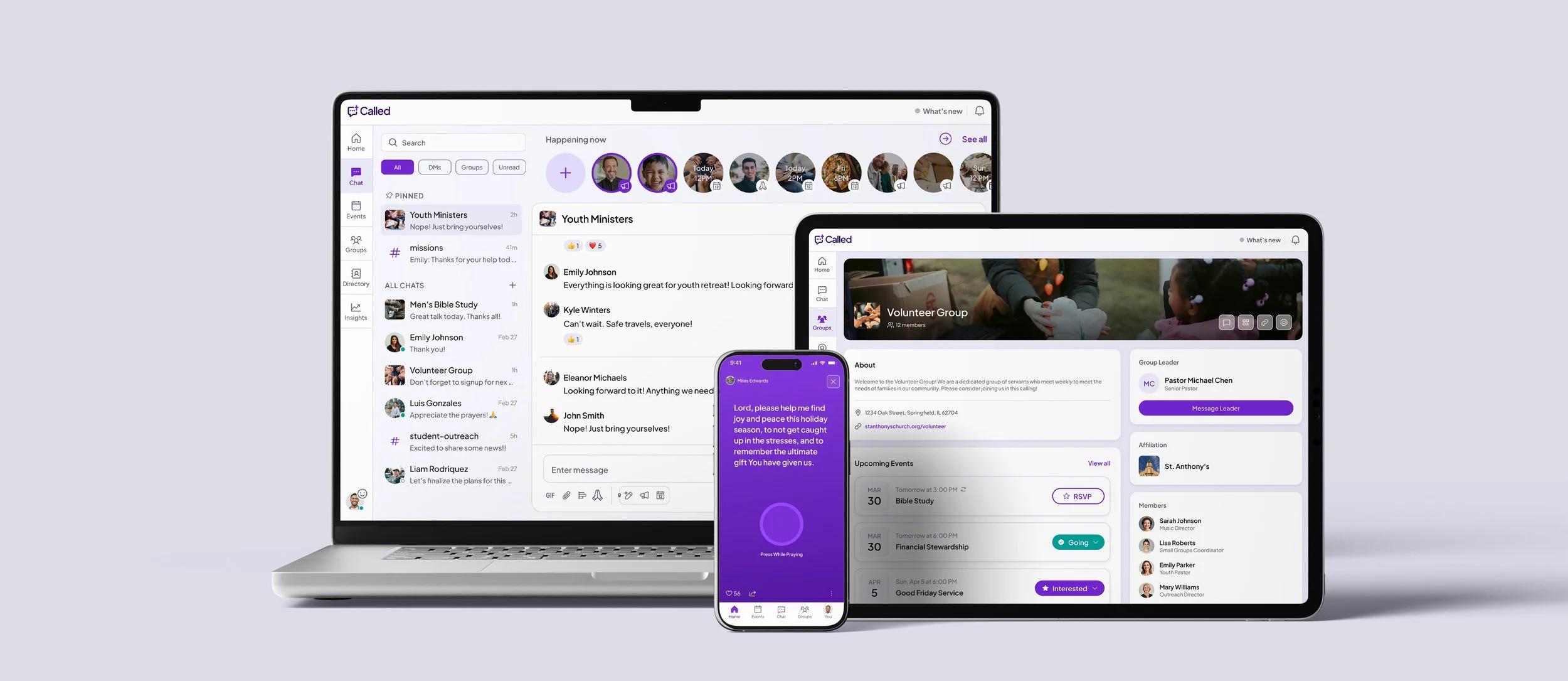
Called is a SaaS platform built for ministry community management. As the sole product designer, I work across the full product: research, information architecture, design systems, onboarding, and feature design — from discovery to production.
Despite being a primary feature, group adoption was consistently underperforming against platform growth.
Opportunities
Groups are a core engagement driver on Called — they're where ongoing ministry relationships form. But despite being a primary feature, group adoption was consistently underperforming against platform growth.
The original flow had three compounding failure points:
Users landed on a messaging feed with no visible path to Groups from the main navigation
Discovering groups required navigating to a community profile via a button labeled 'Details' — a mislabeled entry point that didn't match the user's mental model
The groups screen offered no descriptions, imagery, or context to evaluate whether a group was relevant
Recording of original groups flow
Recording of improved groups flow
Design decisions
Improved group discoverability
Elevated Groups to primary navigation so that users can reach group discovery in one click from any screen, collapsing a 3-step flow into a single step
Updated the layout of the groups screen to a card gallery, providing visual interest and reducing cognitive load
Search groups, sort, and filter controls help users find relevant groups based on their desired criteria
Established information architecture
Separated 'Your groups' from 'Other groups in your community' so that users see their existing memberships first before being invited to discover more
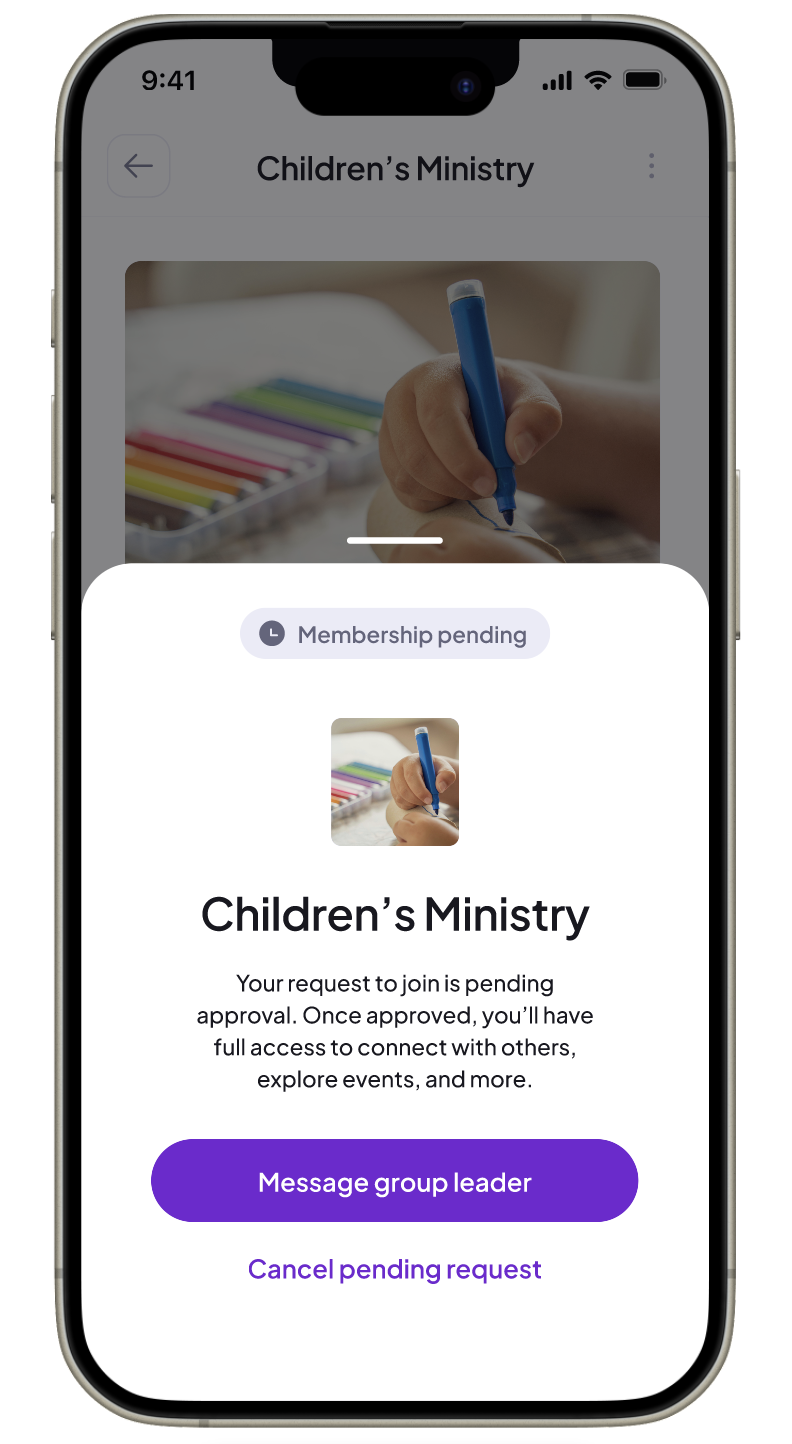
Cards indicate membership status via color-coded pill indicator
Differentiated join intent signals ('Join group' vs 'Request to join'), preventing the failed-expectation experience of requesting access to a group they assumed was open

Monthly group creation increased by 11%
from 50.7 per month to 56.3 per month
Group retention increased to 88.4%
+12.2 points from 76.2%
Results
In addition to receiving positive feedback during usability testing sessions, we observed an increase in group-related performance indicators, including:
Monthly group join velocity more than doubled within five months of launch. Unique users joining groups per month increased by the same magnitude, indicating the lift was driven by new users discovering groups, not existing members joining additional ones.
Retention rate increased 12.2 percentage points, from 76.2% to 88.4%. This indicates that users who found and joined groups stayed on the platform at a meaningfully higher rate.